


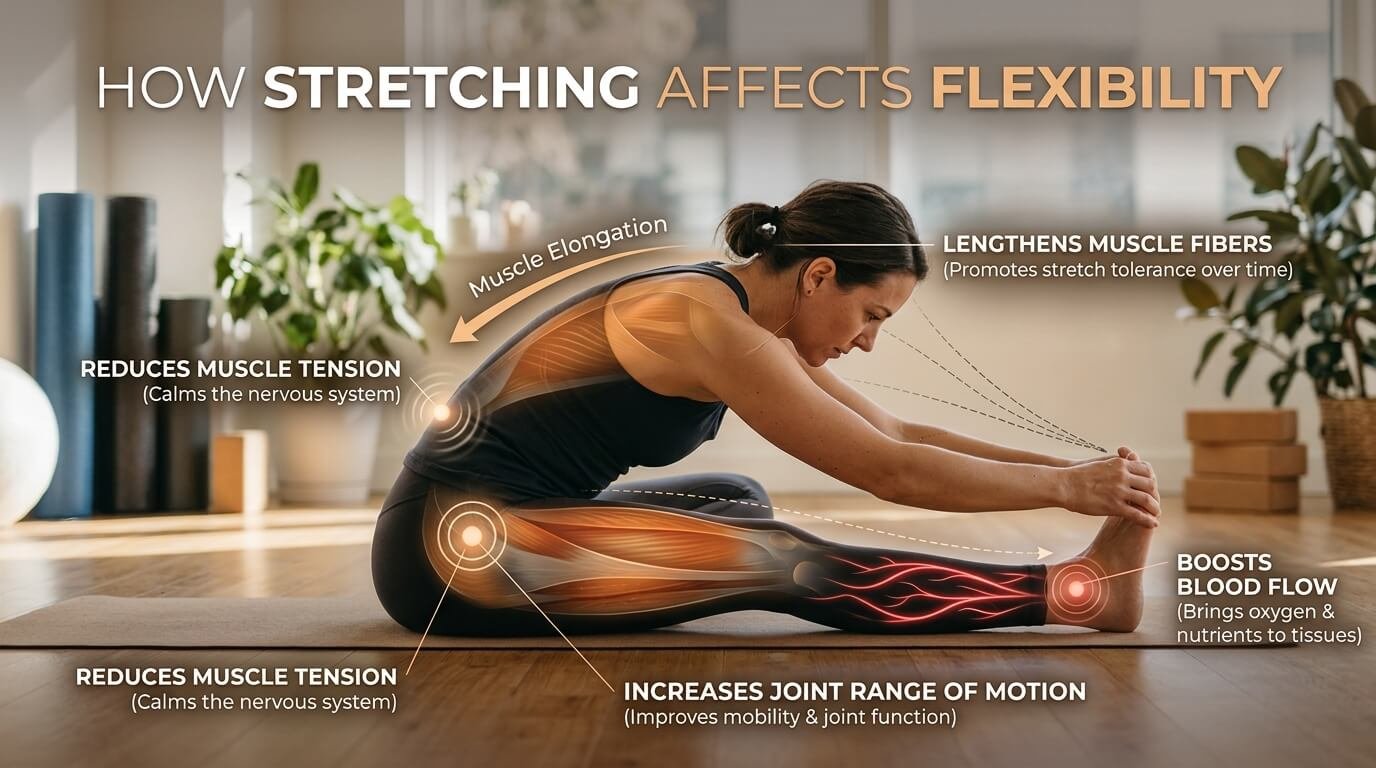
Flexibility plays an important role in how comfortably the body moves during everyday activities. From bending down to tie your shoes to reaching for something on a high shelf, flexible muscles and joints make many movements easier.
Understanding how stretching affects flexibility can help you build a simple exercise routine that supports mobility and physical comfort. Regular stretching may improve your range of motion, reduce feelings of stiffness, and help you move with greater control.
The benefits depend on the type of stretching, how often you practice, and whether you perform each movement correctly. With patience and consistency, stretching can become a useful part of a balanced fitness routine.
How Stretching Affects Flexibility
Stretching affects flexibility by helping the body become more comfortable moving through a wider range of motion. When you stretch regularly, your muscles and surrounding tissues gradually adapt to the movements you practice.
Flexibility is not determined by muscle length alone. The nervous system also influences how far a joint can move comfortably by regulating muscle tension and your response to stretching sensations.
Over time, repeated stretching can improve your tolerance for a particular movement. This allows you to reach farther or hold certain positions more comfortably without feeling the same level of resistance.
However, improvements do not happen overnight. Occasional stretching may provide temporary relief from stiffness, while consistent practice over several weeks can produce more lasting improvements in flexibility.
| Detail | Information |
|---|---|
| Main topic | Stretching and flexibility |
| Primary benefit | Improved range of motion |
| Common methods | Static, dynamic, and active stretching |
| Recommended approach | Gentle, regular practice |
| Suitable for | Most adults, with appropriate modifications |
| Main precaution | Avoid forcing painful movements |
What Happens to Muscles During Stretching?
When you stretch a muscle, the muscle and surrounding connective tissues experience a gentle pulling force. Sensory receptors in these tissues send information to the nervous system about the movement and the amount of tension involved.
The body responds by adjusting muscle activity and its tolerance for the stretching sensation. With repeated practice, a movement that once felt uncomfortable may become easier to perform within a safe range.
Stretching can also temporarily reduce the sensation of stiffness. This is one reason people often feel more comfortable moving after a gentle stretching session, especially following long periods of sitting.
It is important to understand that stretching does not automatically make muscles permanently longer. Changes in flexibility involve several factors, including nervous system responses, tissue properties, joint structure, and regular exposure to movement.
Main Benefits of Stretching for Flexibility
Improves Range of Motion
One of the most noticeable benefits of stretching is improved range of motion. This refers to how far a joint can move in a particular direction while remaining within a comfortable and controlled range.
Better mobility can make activities such as squatting, reaching, bending, and turning easier. It may also help people perform exercises with improved positioning, depending on their individual needs and physical limitations.
Reduces Feelings of Muscle Stiffness
Muscle stiffness can develop after sitting for extended periods, maintaining the same position, or performing unfamiliar physical activities. Gentle stretching introduces movement and may help reduce the feeling of tightness.
For example, stretching the hips after sitting at a desk may make standing and walking feel more comfortable. Moving the shoulders and upper back can also help people who spend many hours working at a computer.
Stretching is not a cure for every cause of stiffness. Persistent pain, swelling, or restricted movement may require professional assessment rather than additional stretching.
Supports Better Movement During Exercise
Many physical activities require a certain level of flexibility. Dancing, swimming, yoga, gymnastics, and strength training can all involve movements that benefit from an appropriate range of motion.
Regular stretching may help you reach the positions required for these activities more comfortably. It can also support controlled movement when combined with strength, balance, and coordination exercises.
Greater flexibility alone does not guarantee better athletic performance. The most useful range of motion depends on the activity, and excessive flexibility without sufficient strength or control may not provide an advantage.
Makes Everyday Activities Easier
Flexibility affects many routine tasks that people rarely think about. Getting dressed, reaching overhead, picking something up from the floor, and turning to look behind you all involve movement around different joints.
When your available range of motion improves, some of these activities may feel less restricted. This can be particularly helpful for people who spend much of the day sitting or who are gradually returning to regular exercise.
The goal is not necessarily to become extremely flexible. Instead, aim for enough comfortable movement to support your daily activities and personal fitness goals.
Different Types of Stretching and Their Effects
Static Stretching
Static stretching involves moving into a comfortable position and holding it for a period of time. For example, you might extend one leg and gently stretch the muscles at the back of your thigh.
This method is commonly used to improve flexibility because it allows the body to become familiar with a specific position. Beginners can start with short holds and gradually increase the duration as the movement becomes more comfortable.
Avoid bouncing or forcing your body deeper into the stretch. A mild pulling sensation is generally appropriate, but sharp pain, numbness, or tingling means you should stop.
Dynamic Stretching
Dynamic stretching uses controlled, repeated movements to take the body through its available range of motion. Examples include arm circles, gentle leg swings, and walking lunges.
This approach is often useful before exercise because it prepares the body for movement. Unlike static stretching, dynamic stretching does not require you to remain in one position for an extended period.
The movements should begin gently and become slightly larger as your body warms up. Fast, uncontrolled swings are unnecessary and may increase the risk of discomfort or injury.
Active Stretching
Active stretching involves using your own muscles to move a body part into a stretched position without relying heavily on an external force. Holding one leg raised in front of you using your hip muscles is one example.
This approach can help develop control and strength within a particular range of motion. It is useful when your goal involves moving actively rather than simply reaching a passive stretching position.
Active stretching can be challenging for beginners because it requires muscular effort and balance. Start with movements you can control comfortably, and use support when necessary.
How Often Should You Stretch to Improve Flexibility?
Consistency matters more than attempting difficult stretches in a single session. For many healthy adults, stretching major muscle groups at least two to three days per week is a reasonable starting point.
You can also include brief stretching sessions in your daily routine, especially if you experience stiffness after sitting. Even five to ten minutes can help you build a regular habit when you focus on a few areas that need attention.
For static stretches, a common guideline is to hold each position for approximately 10 to 30 seconds and repeat it two to four times, depending on comfort and individual needs. Stretch both sides when appropriate, and breathe normally throughout each movement.
People with specific mobility goals may benefit from more frequent practice. However, the right routine depends on your age, physical condition, activity level, and any existing injuries.
Common Stretching Mistakes to Avoid
One common mistake is stretching too aggressively in an attempt to see faster results. Forcing a joint beyond its comfortable range can irritate tissues or cause injury, particularly when the body is not prepared for the movement.
Another mistake is holding your breath. Relaxed, steady breathing can help you remain comfortable and avoid unnecessary tension while stretching.
Skipping warm-ups before demanding activity is also unhelpful. Gentle movement before more intense exercise prepares your body for activity, while dynamic stretching is often a suitable choice for this purpose.
Finally, avoid judging your progress by comparing yourself with other people. Differences in joint structure, age, training history, and natural mobility mean that flexibility varies considerably from person to person.
How to Build a Simple Daily Stretching Routine
Start with a few gentle movements that target the areas you use most often. A basic routine might include shoulder circles, chest stretches, gentle hip stretches, calf stretches, and hamstring stretches.
Spend a few minutes walking or moving comfortably before beginning deeper stretches. This is especially useful when you have been sitting for a long time or are stretching before physical activity.
Move slowly into each position, hold it without bouncing, and release gradually. If one stretch causes pain, reduce the range of motion or choose a different movement that feels more comfortable.
Track your progress by noticing whether everyday movements become easier over time. You do not need to measure every stretch or reach a particular position to benefit from improved mobility.
Final Thoughts
Understanding how stretching affects flexibility makes it easier to choose movements that support your daily life and fitness goals. Regular, controlled stretching can improve range of motion, reduce feelings of stiffness, and make certain activities more comfortable.
Start with simple exercises, practice consistently, and avoid pushing your body beyond its limits. Combining flexibility work with strength training and regular movement can help you develop a balanced approach to physical health.
If you have a recent injury, ongoing joint pain, or a medical condition that affects movement, consult a qualified healthcare professional before beginning a new stretching routine.
Frequently Asked Questions
How does stretching affect flexibility over time?
Regular stretching can improve your comfortable range of motion by changing your tolerance for stretching sensations and influencing the body’s responses to movement. Improvements generally develop gradually with consistent practice.
How long does it take to improve flexibility?
Some people notice changes in comfort or movement after a few sessions, while more substantial improvements may take several weeks. Results depend on your starting flexibility, routine, consistency, and individual physical characteristics.
Is stretching every day good for flexibility?
Daily gentle stretching can be helpful if your body tolerates it well. You should adjust the intensity to your needs and allow time for recovery when a movement causes soreness or discomfort.
Is static or dynamic stretching better for flexibility?
Both types can be useful. Static stretching is commonly used to develop flexibility, while dynamic stretching helps prepare the body for movement before exercise. The best option depends on your goal and when you plan to stretch.
Can stretching prevent injuries?
Stretching can help improve range of motion, but it does not guarantee injury prevention. Appropriate training, strength, balance, recovery, and correct exercise technique also play important roles in reducing injury risk.
Should stretching hurt to be effective?
No. You should generally feel a mild pulling sensation rather than sharp or intense pain. Stop if you experience pain, numbness, tingling, or unusual discomfort.
Can stretching improve posture?
Stretching may help when limited flexibility contributes to restricted movement or discomfort. However, posture also depends on muscle strength, movement habits, and other factors, so stretching alone may not correct every postural concern.
What is the best time to stretch?
You can stretch at different times depending on your goals. Dynamic movements are often useful before exercise, while gentle static stretches may fit well after activity or during a separate flexibility session.
