


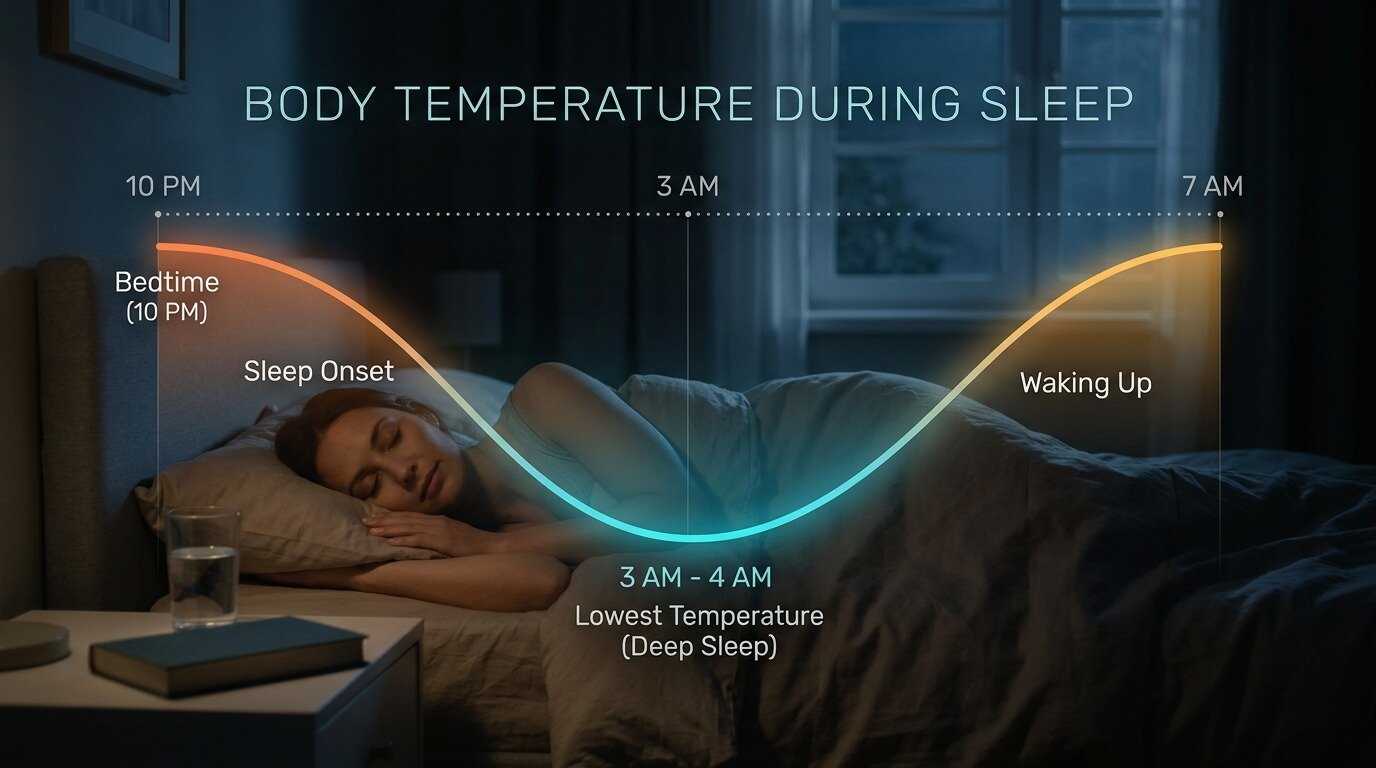
Have you ever noticed that your body feels cooler at night or that you sometimes wake up feeling hot? These changes are usually part of the body’s natural sleep cycle. Body temperature does not remain the same throughout the day and night. Instead, it rises and falls according to an internal body clock that helps regulate sleep, energy, and other essential functions.
Understanding how body temperature changes during sleep can explain why a cool bedroom often feels more comfortable and why heavy blankets sometimes make it harder to rest. These temperature changes are generally normal, although certain conditions can cause unusual nighttime sweating or chills.
How Body Temperature Changes During Sleep
The human body follows a daily rhythm known as the circadian rhythm. This internal clock helps control when you feel awake, when you become sleepy, and how your body manages heat throughout a 24-hour period.
Body temperature generally reaches its higher levels during the afternoon or early evening. As bedtime approaches, the body begins preparing for rest by releasing heat and gradually lowering its internal temperature.
This process does not mean your body becomes cold or stops producing heat. Instead, it adjusts heat production and heat loss to support the natural transition from wakefulness to sleep.
| Quick Fact | Details |
|---|---|
| Main process | Natural temperature regulation |
| Typical nighttime pattern | Core body temperature gradually decreases |
| Main regulator | Circadian rhythm |
| Important hormones | Melatonin and other temperature-regulating hormones |
| Factors affecting temperature | Room conditions, bedding, hormones, illness, and activity |
| Best sleeping environment | A comfortable, slightly cool room |
Why Body Temperature Drops at Night
One important reason body temperature decreases before sleep is that blood vessels near the skin widen, allowing more heat to escape from the body’s surface. This process is called peripheral vasodilation.
As heat leaves the body, core temperature gradually falls. This cooling process helps signal that the body is ready to rest and supports the normal timing of sleep.
The temperature change is usually gradual rather than sudden. Its exact timing and size vary between individuals, depending on their daily schedules, environment, health, and personal biological rhythms.
What Happens to Temperature During Different Sleep Stages?
Sleep consists of several stages, including non-rapid eye movement (NREM) sleep and rapid eye movement (REM) sleep. Each stage involves different patterns of brain activity, muscle activity, and body regulation.
During NREM sleep, the body generally maintains its nighttime cooling pattern. Heart rate and breathing often slow, while the body continues adjusting heat production and heat loss.
REM sleep is different because temperature regulation becomes less responsive to environmental changes. During this stage, the body may rely less on certain automatic responses that normally help maintain a stable temperature.
These changes are part of normal sleep physiology. They help explain why bedding and bedroom conditions can influence comfort throughout the night.
What Is the Normal Body Temperature During Sleep?
Many people learn that normal body temperature is approximately 98.6°F (37°C). However, this figure is only a traditional reference point, not a fixed temperature for every person.
Normal body temperature varies with age, activity, measurement method, hormones, and time of day. For many healthy adults, temperatures measured near 97°F to 99°F (36.1°C to 37.2°C) can fall within the usual range, depending on how and where the temperature is measured.
During sleep, core temperature commonly decreases by several tenths of a degree Celsius. The precise amount varies, so there is no single nighttime temperature that applies to everyone.
A slightly lower temperature during sleep is generally normal. However, a temperature that rises significantly because of an infection or another medical condition should not automatically be attributed to the sleep cycle.
Is It Normal to Feel Cold While Sleeping?
Feeling slightly cooler at night is common because the body releases heat as it prepares for sleep. A cool room, lightweight clothing, or insufficient bedding can make this sensation more noticeable.
However, feeling extremely cold, experiencing persistent chills, or waking repeatedly because of cold discomfort may have other explanations. Environmental conditions, certain medications, and health problems can all affect temperature perception.
If cold sensations occur frequently without an obvious environmental reason, consider discussing them with a healthcare professional, especially if you also experience fatigue, unexplained weight changes, or other new symptoms.
Factors That Affect Body Temperature During Sleep
Several factors influence how the body manages heat at night. Although the circadian rhythm establishes the general pattern, daily habits and environmental conditions can make nighttime temperature changes more noticeable.
Bedroom Temperature and Bedding
The temperature of your bedroom directly affects how comfortable you feel while sleeping. A room that is too warm can limit heat loss and cause restlessness, while a room that is too cold may lead to discomfort or repeated awakenings.
Thick blankets, synthetic sleepwear, and poorly ventilated bedding can trap heat around the body. Choosing breathable fabrics and adjusting blankets to match the season can help maintain a comfortable sleeping environment.
Many adults find a bedroom temperature around 60°F to 67°F (15.5°C to 19.5°C) comfortable, although individual preferences vary. The best setting is one that allows you to sleep comfortably without overheating or shivering.
Hormones and Body Temperature
Hormones play an important role in regulating temperature and sleep. Melatonin, which is released in response to darkness, helps coordinate the body’s nighttime rhythm and is associated with the normal decline in core temperature.
Other hormonal changes can also affect nighttime comfort. For example, fluctuations in estrogen during perimenopause and menopause may contribute to hot flashes and night sweats.
Thyroid hormones influence metabolism and heat production as well. When hormonal changes cause persistent temperature discomfort, a healthcare professional can help determine whether further assessment is needed.
Exercise, Food, and Daily Habits
Physical activity increases heat production, so exercising intensely close to bedtime may leave your body warmer for a while. Allowing time to cool down after a workout can make it easier to settle into sleep.
Large meals can also temporarily increase heat production as the body digests food. Alcohol may contribute to nighttime warmth, sweating, and disrupted sleep, even if it initially makes you feel sleepy.
A consistent sleep schedule, comfortable clothing, and a relaxing evening routine can help support the body’s natural temperature rhythm.
Why Do Some People Sweat or Feel Hot During Sleep?
Occasionally waking up warm is not necessarily a sign of illness. A heated bedroom, thick bedding, stress, or an evening workout can explain many cases of nighttime sweating.
However, repeated episodes of heavy sweating that soak your clothes or bedding deserve attention, particularly when the bedroom is comfortably cool. Possible causes include hormonal changes, medication side effects, infections, and certain other medical conditions.
A fever can also raise body temperature during the night. If you wake feeling unusually hot, consider checking your temperature with a reliable thermometer rather than relying only on how your skin feels.
Seek medical advice if night sweats persist, repeatedly interrupt sleep, or occur alongside unexplained weight loss, ongoing fever, or other concerning symptoms. Severe symptoms or difficulty breathing require urgent medical attention.
How to Maintain a Comfortable Body Temperature at Night
You do not need to monitor your temperature constantly to support healthy sleep. A few simple adjustments can help your body follow its natural nighttime cooling pattern.
- Keep your bedroom comfortable: Adjust the thermostat or use a fan when appropriate.
- Choose breathable bedding: Cotton and other breathable materials may help reduce trapped heat.
- Wear comfortable sleepwear: Lightweight clothing can help you avoid overheating.
- Maintain a regular bedtime: Consistent sleep and wake times support your circadian rhythm.
- Limit alcohol near bedtime: Alcohol can contribute to sweating and fragmented sleep.
- Allow time to cool down: After exercise or a hot shower, give your body time to settle before getting into bed.
Pay attention to your own comfort rather than following a strict temperature rule. If you sleep well and wake feeling refreshed, your current bedroom conditions may already be suitable.
Frequently Asked Questions
1. Does body temperature decrease during sleep?
Yes. Core body temperature usually decreases in the hours leading up to sleep and remains relatively low during much of the night. This is a normal part of the circadian rhythm.
2. What is a normal body temperature while sleeping?
There is no single normal nighttime temperature for everyone. Body temperature varies naturally, and the reading depends on the measurement method, age, and individual differences.
3. Why do I feel hotter at night than during the day?
A warm bedroom, heavy bedding, hormonal changes, alcohol, stress, or illness may cause you to feel hot at night. Persistent or unexplained nighttime overheating should be discussed with a healthcare professional.
4. Can body temperature changes affect sleep quality?
Yes. The body’s natural cooling process supports sleep, while excessive heat or cold can cause discomfort and awakenings. A comfortable room and suitable bedding can help you sleep more consistently.
5. Is sweating during sleep normal?
Light sweating can happen when the room is warm or bedding traps heat. Frequent, heavy night sweats, especially when accompanied by fever or unexplained weight loss, may require medical evaluation.
6. Does body temperature drop during REM sleep?
Temperature regulation becomes less responsive during REM sleep. The body may not adjust to changes in environmental temperature as effectively as it does during some other sleep stages.
7. When should I worry about nighttime temperature changes?
Seek medical advice if you experience persistent night sweats, repeated unexplained chills, a recurring fever, or other unusual symptoms. A measured fever of 100.4°F (38°C) or higher is generally considered a fever in adults.
Conclusion
Body temperature changes during sleep because the body’s internal clock coordinates heat loss, hormone activity, and the transition from wakefulness to rest. A gradual decline in core temperature is a normal part of this process and helps support healthy sleep.
Bedroom conditions, bedding, exercise, and hormonal changes can influence how warm or cold you feel during the night. By maintaining a comfortable sleeping environment and paying attention to persistent symptoms, you can better understand your body’s nighttime patterns and support more restful sleep.

1 Comment
Pingback: How Stretching Affects Flexibility Benefits, Types, and Tips - Paperomagazine