


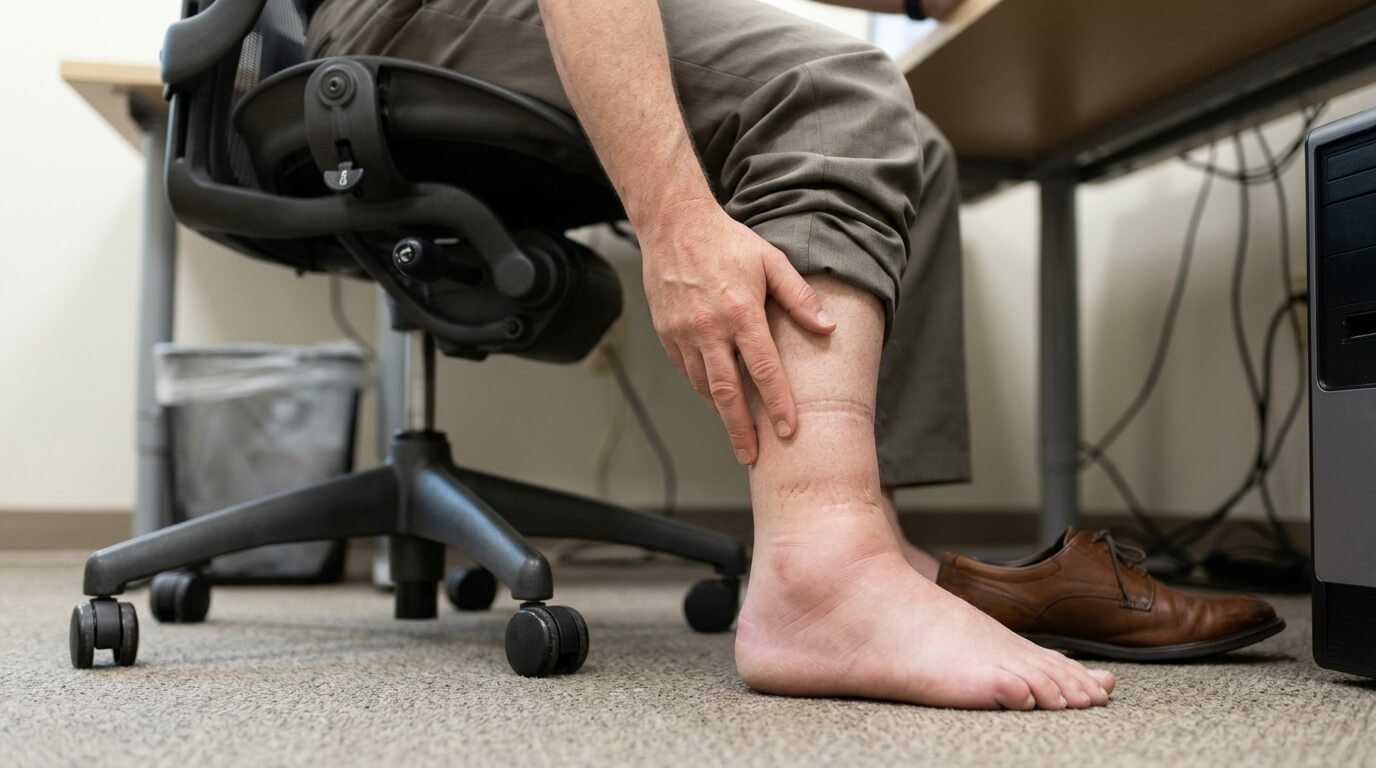
Have you ever noticed that your feet or ankles look puffy after sitting for a long time? This can happen while working at a desk, traveling in a car, sitting on a plane, or relaxing at home. In many cases, the swelling develops because fluid collects in the lower parts of the body when you remain in one position for too long.
Understanding why feet swell after sitting can help you recognize common causes and find simple ways to prevent discomfort. Although occasional swelling may improve with movement, persistent or unexplained swelling can sometimes point to an underlying health problem that needs medical attention.
Why Do Feet Swell After Sitting for a Long Time?
The main reason feet swell after sitting is that blood circulation and fluid movement can become less efficient when your legs remain still. Gravity naturally pulls blood and other fluids toward the lower parts of your body. When you sit for hours without moving, fluid can gradually collect around your feet and ankles.
Your calf muscles help push blood back toward your heart whenever you walk or move your legs. Sitting for extended periods reduces this muscle activity, which can make it harder for fluid to move upward efficiently. As a result, your feet may feel tight, heavy, or uncomfortable.
This type of swelling is often temporary and may improve after standing, walking, or elevating your legs. However, the amount of swelling and how quickly it develops can vary depending on your health, daily habits, medications, and surrounding temperature.
| Quick Overview | Details |
|---|---|
| Main symptom | Swollen feet and ankles |
| Common cause | Fluid buildup from prolonged sitting |
| Medical term | Peripheral edema |
| Common triggers | Inactivity, heat, and excess salt |
| Helpful measures | Walking, ankle movements, and leg elevation |
| When to seek help | Sudden swelling, pain, or breathing difficulties |
Common Causes of Swollen Feet After Sitting
Poor Blood Circulation
Reduced movement can slow the return of blood from your legs to your heart. When blood collects in the lower extremities, pressure inside small blood vessels may increase, allowing fluid to move into nearby tissues.
People who sit for long working hours may notice swelling around their ankles by the end of the day. Moving regularly can help, but persistent swelling may require an assessment for circulation problems or other medical conditions.
Fluid Retention
Fluid retention occurs when excess fluid builds up in body tissues. It can cause noticeable puffiness in the feet, ankles, and sometimes the lower legs, particularly after spending several hours sitting.
Eating too much salt, hormonal changes, certain medications, and some health conditions can contribute to fluid retention. If swelling happens frequently or does not improve overnight, consult a healthcare professional to identify the cause.
Hot Weather
Warm weather can make feet swell after sitting because heat causes blood vessels near the skin to widen. This helps your body release heat but can also encourage fluid to collect in the surrounding tissues.
The swelling may become more noticeable when you sit for extended periods in a hot room or during summer travel. Keeping cool, drinking an appropriate amount of water, and moving your legs regularly may help reduce mild heat-related swelling.
Sitting With Your Legs Down
Your sitting position can influence how much fluid collects in your feet. Keeping your legs hanging down for hours, especially without moving your ankles, can increase the effects of gravity on blood and fluid circulation.
Crossing your legs for long periods may also make you uncomfortable and restrict movement. Try keeping both feet supported, changing positions regularly, and avoiding prolonged periods without standing or stretching.
Certain Medications
Some medicines can cause swelling in the feet and ankles as a side effect. These include certain blood pressure medications, anti-inflammatory drugs, corticosteroids, and some hormone treatments.
If you notice swelling after starting a new medicine or changing a dose, discuss it with your doctor or pharmacist. Do not stop taking prescribed medication without professional guidance, because doing so may affect the condition being treated.
Health Conditions That Can Cause Swollen Feet
Although sitting-related swelling is often harmless, some medical conditions can cause similar symptoms. Chronic venous insufficiency occurs when the veins have difficulty returning blood toward the heart, allowing blood to collect in the legs and ankles.
Heart, kidney, and liver conditions can also contribute to fluid buildup. In these situations, swelling may occur alongside other symptoms, such as unusual tiredness, changes in urination, abdominal swelling, or breathlessness.
A blood clot in a deep vein, known as deep vein thrombosis (DVT), is another important possibility, particularly after prolonged immobility. It often causes swelling in one leg and may be accompanied by pain, tenderness, warmth, or redness.
These symptoms do not automatically mean you have a serious condition, but they should not be ignored. A healthcare professional can assess your symptoms, medical history, and risk factors to determine whether testing or treatment is necessary.
How to Reduce Feet Swelling After Sitting
Move Your Feet and Ankles
Gentle movement helps activate the calf muscles and supports blood flow back toward the heart. If you have been sitting for a long time, point your toes forward and then pull them toward your body several times.
You can also rotate your ankles slowly in both directions while seated. These movements are especially useful when you cannot stand immediately, although they should not replace medical evaluation for unexplained or painful swelling.
Take Short Walking Breaks
Standing up and walking for a few minutes at regular intervals can help reduce fluid buildup. If you work at a desk, consider getting up approximately every 30 to 60 minutes, when practical, to stretch your legs and change position.
During long car journeys, stop safely when possible to walk around. On flights, move your ankles frequently and walk when permitted and safe to do so.
Elevate Your Legs
Raising your legs can help gravity move accumulated fluid away from your feet and ankles. When resting, place your legs on pillows so your feet are elevated above the level of your heart, if comfortable.
This approach may provide relief when swelling is related to prolonged sitting or mild fluid retention. However, leg elevation is not a substitute for urgent care when swelling occurs suddenly or comes with warning signs.
Drink Enough Water and Limit Excess Salt
Staying hydrated supports normal body functions, while excessive sodium intake can contribute to fluid retention in some people. Choose balanced meals and limit heavily salted snacks, processed foods, and other products with high sodium levels.
Do not deliberately restrict fluids or drink excessive amounts of water to treat swelling. People with heart or kidney conditions may need individualized fluid and salt recommendations from their healthcare team.
Consider Compression Stockings
Graduated compression stockings apply gentle pressure to the legs and may help improve circulation in people with certain causes of swelling. They can be particularly useful for some travelers or people with venous circulation problems.
However, compression stockings are not suitable for everyone, especially people with certain arterial circulation problems. Seek medical advice before using them for persistent swelling, and obtain urgent assessment if a blood clot is suspected.
When Should You Worry About Swollen Feet?
Occasional swelling that improves after moving or resting may not be serious. However, swelling that repeatedly occurs, lasts for several days, becomes progressively worse, or has no clear explanation deserves medical attention.
Seek urgent medical assessment if one foot or leg becomes suddenly swollen, painful, warm, or red, as these can be signs of a blood clot. Do not massage a leg when a clot is suspected.
Call emergency services immediately if swelling occurs with shortness of breath, chest pain, fainting, or coughing up blood. These symptoms can indicate a potentially life-threatening problem.
If you are pregnant, new or sudden swelling of the face or hands, particularly with a severe headache, vision changes, or upper abdominal pain, also requires urgent assessment.
How to Prevent Feet From Swelling After Sitting
The most effective prevention habits focus on movement, circulation, and managing any underlying health issues. Avoid sitting in the same position for several hours, and make regular movement part of your daily routine.
Wear comfortable shoes that do not squeeze your feet, especially during long working days or travel. If your feet tend to swell in hot weather, take breaks in cooler surroundings and avoid restrictive footwear.
Maintaining a healthy weight, eating a balanced diet, and following your prescribed treatment plan may also help. If swelling continues despite these measures, arrange a medical appointment rather than relying only on home remedies.
Final Thoughts
Feet swelling after sitting is often linked to gravity, reduced muscle movement, and temporary fluid buildup. Taking regular walking breaks, moving your ankles, elevating your legs, and limiting excess salt may help prevent mild swelling.
However, swelling can sometimes indicate a circulation problem or another medical condition. Pay attention to how quickly it develops, whether one or both legs are affected, and whether other symptoms appear. When swelling is persistent, sudden, painful, or accompanied by breathing difficulties, seek appropriate medical care.
Frequently Asked Questions
Is it normal for feet to swell after sitting?
Mild swelling can occur after prolonged sitting because gravity and reduced muscle activity encourage fluid to collect in the lower legs. It often improves with walking or leg elevation. Frequent, persistent, or unexplained swelling should be assessed by a healthcare professional.
Why do my feet swell after sitting but not walking?
Walking activates the calf muscles, which help move blood back toward the heart. Sitting keeps these muscles relatively inactive, allowing fluid to accumulate around the feet and ankles. If the difference is pronounced or the swelling persists, seek medical advice.
How long does swelling from sitting usually last?
Mild swelling caused by prolonged sitting may improve within minutes to several hours after movement and leg elevation. The timing varies depending on the cause. Swelling that does not improve, repeatedly returns, or becomes worse needs medical evaluation.
Can dehydration cause swollen feet?
Dehydration is not usually the direct cause of swollen feet, although fluid balance can be affected by several factors. Excess salt, medications, circulation problems, and certain medical conditions are more common explanations. Drink water according to your needs and follow any medical fluid restrictions.
Can swollen feet be a sign of heart problems?
Yes. Heart conditions that affect the body’s ability to circulate blood efficiently can cause fluid to accumulate in the feet and ankles. Swelling accompanied by breathlessness, difficulty lying flat, or sudden weight gain requires prompt medical attention.
Should I be worried if only one foot is swollen?
Swelling in one foot or leg can have several causes, including an injury, infection, or blood clot. Sudden swelling, especially with pain, warmth, or redness, needs urgent medical assessment. Seek emergency help if it occurs with chest pain or breathing difficulties.
What is the fastest way to reduce swollen feet after sitting?
If the swelling is mild and there are no warning signs, try walking gently, moving your ankles, and elevating your legs. Avoid remaining in one position for long periods. Sudden or painful swelling should be assessed before attempting to treat it at home.
