


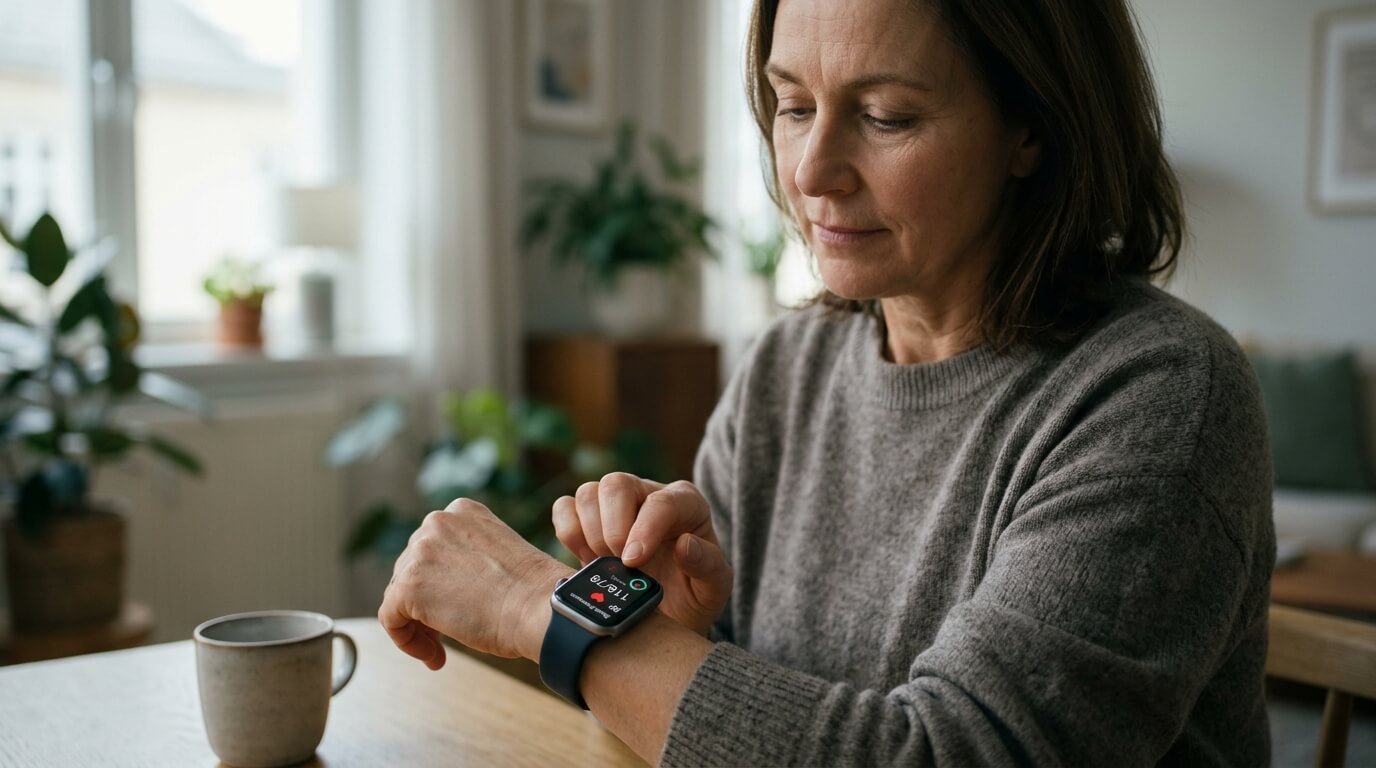
Checking your blood pressure used to mean a trip to the clinic or a bulky cuff on the kitchen table. Now watches, bands, and rings promise readings from your wrist all day long. Wearable blood pressure monitoring is growing fast, but it comes with limits worth understanding.
How Wearable Blood Pressure Monitoring Works
Wearable devices use two main approaches. The first uses a tiny inflatable cuff built into a watch strap, which squeezes your wrist the way a regular cuff squeezes your arm.
The second approach is cuffless. It uses light sensors on the back of the device to track how blood moves under your skin, then estimates pressure from the pulse wave.
Cuffless devices are more comfortable and can take readings often. The catch is that they estimate rather than measure directly, and most need to be calibrated against a standard cuff.
| Quick Facts | Details |
|---|---|
| Topic | Wearable blood pressure monitoring |
| Common devices | Smartwatches, wrist bands, smart rings |
| Main methods | Mini inflatable cuff, optical sensors, pulse wave analysis |
| Best for | Spotting trends over days and weeks |
| Not a replacement for | Clinical diagnosis or a validated upper arm cuff |
| Normal reading | Below 120/80 mmHg for most adults |
| Who benefits most | People with hypertension, older adults, and fitness users |
Why Blood Pressure Matters
High blood pressure often has no symptoms. Many people carry it for years without knowing, and it quietly raises the risk of stroke, heart disease, and kidney problems.
A single reading in a doctor’s office can be misleading. Some people get nervous in clinics and show higher numbers, while others look fine in the office but run high at home.
That gap is where wearable blood pressure monitoring becomes useful. More readings across more situations give a clearer picture than one visit every few months.
Types of Wearable Blood Pressure Devices
Smartwatches are the most common choice. Some include a mini cuff, while others rely on optical sensors and send alerts when patterns suggest your pressure may be running high.
Wrist bands and bracelets focus on health tracking and often take frequent passive readings. They suit people who want to watch trends without thinking about it.
Smart rings are the newest option. They are small and easy to wear overnight, though their blood pressure features are usually less established than those of watches.
How Accurate Is Wearable Blood Pressure Monitoring?
Accuracy is the biggest question. Upper arm cuffs that have been clinically validated remain the standard for home use, and most doctors still trust them above anything worn on the wrist.
Wrist devices are sensitive to position. If your wrist sits below or above heart level, the reading can shift by several points.
Cuffless devices can also drift over time as your body, skin, and activity change. That is why many makers ask you to recalibrate every few weeks.
Who Should Use a Wearable Blood Pressure Monitor
People who already have hypertension can use wearable blood pressure monitoring to see how food, stress, sleep, and medication affect their numbers. Sharing that data with a doctor can lead to better treatment decisions.
Older adults may like the convenience, since there is no cuff to wrap and no screen to read. Family members can sometimes view the data remotely.
Healthy people with a family history of high blood pressure can use it as an early warning tool. It should prompt a conversation with a doctor, not a self-diagnosis.
Benefits of Wearable Blood Pressure Monitoring
The biggest advantage is volume. A wearable can collect far more readings than you would ever take by hand, and that builds a pattern you can actually learn from.
It also removes friction. People are far more likely to keep monitoring when it takes no extra effort, and consistency is what makes the data meaningful.
Many devices connect to an app that charts your results. Seeing a week of numbers beside your sleep and activity can make the link between habits and blood pressure easy to spot.
Limitations and Risks to Keep in Mind
No wearable should be used to change or stop medication on its own. A wrong reading could lead to a bad decision, so treat the numbers as a guide and confirm important changes with a doctor.
Some people also become anxious from constant tracking. If checking the app starts to cause stress, that stress can push your readings up.
Finally, not every device has regulatory clearance. Check whether a product has been cleared or approved in your country before you trust it with health decisions.
How to Choose the Right Device
Start with validation. Look for a device that has been tested against a clinical standard and has clearance from a health regulator in your region.
Next, check whether it needs calibration and how often. A device that asks for a cuff check every month is fine, as long as you are willing to do it.
Then think about comfort and battery life. A monitor you take off to charge every day will miss readings, so pick one that fits your routine.
Tips for Getting Better Readings
Sit still for five minutes before taking a manual reading. Keep your feet flat, rest your arm on a table, and hold your wrist at heart level.
Avoid caffeine, exercise, and smoking for at least thirty minutes before checking. These can raise your pressure and make the result look worse than your true baseline.
Take readings at the same times each day, such as morning and evening. Consistent timing makes it easier to compare numbers and notice real changes.
The Future of Wearable Blood Pressure Monitoring
Research is moving quickly. Companies are testing better sensors and smarter algorithms that adjust to each person, and some devices now send alerts when a pattern points to possible hypertension.
Over time, accuracy should improve and calibration should become less of a chore. For now, the best approach is to use these tools alongside a trusted cuff and regular medical advice.
Final Thoughts
Wearable blood pressure monitoring gives you something a clinic visit cannot: a steady stream of data from your normal day. Used wisely, it can help you spot patterns and talk to your doctor with better information.
Just remember what it is. It is a tracking tool, not a diagnosis, so pair it with a validated cuff and regular checkups.
Frequently Asked Questions
Can a smartwatch replace a blood pressure cuff?
Not yet. Most doctors still rely on validated upper arm cuffs, and a smartwatch works best as a trend tracker that sits beside one.
Is wearable blood pressure monitoring safe?
Yes, the devices themselves are safe to wear. The risk comes from acting on a wrong reading, so always confirm important numbers with a proper cuff or your doctor.
How often should I calibrate my wearable?
It depends on the brand. Many cuffless models ask for a calibration against a standard cuff every few weeks, so check the instructions for your device.
Why does my wearable show different numbers from my cuff?
Wrist position, movement, skin tone, fit, and the way each device measures pressure can all cause differences. A small gap is normal, but a large and steady one is worth discussing with a doctor.
Who should avoid relying on these devices?
People with irregular heartbeats, severe hypertension, or complex heart conditions should be careful. Their doctors may prefer clinic or arm cuff measurements for treatment decisions.
What is a normal blood pressure reading?
For most adults, a reading below 120/80 mmHg is considered normal. Readings that stay at or above 130/80 mmHg across several days should be reviewed by a healthcare provider.

1 Comment
Pingback: Why People Feel Tired After Sleeping Causes, Symptoms, and Solutions - Paperomagazine