


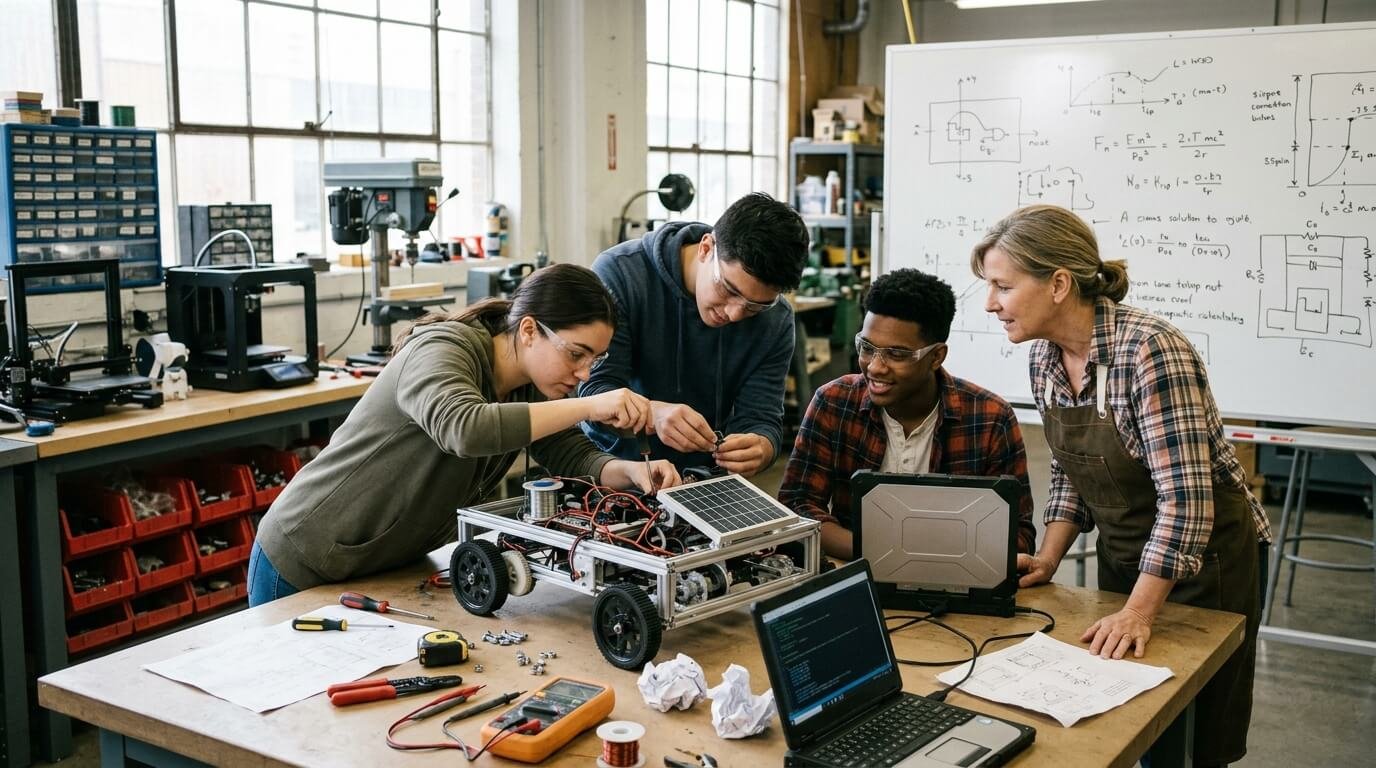
Learning is an important part of personal and professional growth, but simply reading information does not always help people understand how to use it. Students often remember lessons better when they can connect classroom knowledge with real-life experiences. This is one of the main reasons why practical learning matters in modern education.
Practical learning allows students to develop skills by doing activities, solving problems, conducting experiments, and working on real tasks. Instead of depending entirely on books and lectures, learners actively participate in the learning process. This approach makes education more meaningful and prepares students to handle challenges beyond the classroom.
Why Practical Learning Matters in Education
Practical learning plays an important role in helping students understand subjects beyond their definitions and theories. When learners participate in activities, they can see how information works in actual situations. For example, a science student may understand a concept more clearly by conducting an experiment than by reading about it several times.
This approach also encourages students to become active participants rather than passive listeners. They ask questions, test ideas, observe results, and learn from their experiences. These activities make lessons more engaging and help learners build a stronger connection between what they study and what they experience in everyday life.
| Aspect | Details |
|---|---|
| Main purpose | Connect knowledge with real-world experience |
| Common methods | Experiments, projects, demonstrations, and practice |
| Key benefits | Better understanding, confidence, and problem-solving |
| Suitable for | Students, teachers, professionals, and lifelong learners |
| Learning environment | Classrooms, laboratories, workplaces, and everyday situations |
Practical Learning Improves Understanding
One major reason practical learning matters is that it makes complicated ideas easier to understand. Some subjects contain concepts that may seem confusing when explained only through written material. Demonstrations, models, and hands-on activities allow students to observe those concepts and understand how they work.
For instance, learning about electricity becomes more interesting when students build a simple circuit under proper supervision. They can observe how different components work together and identify what happens when a connection changes. This experience gives them a clearer understanding of the lesson and helps them remember important details.
It Helps Students Develop Real-World Skills
Academic knowledge is valuable, but students also need skills they can apply outside school or college. Practical learning provides opportunities to develop communication, teamwork, time management, decision-making, and critical thinking. These abilities are useful in education, employment, and everyday responsibilities.
Group projects are a simple example of this approach. Students may need to divide tasks, share ideas, solve disagreements, and complete their work before a deadline. Through these activities, they learn how to cooperate with others and take responsibility for their contributions. Such experiences can help them feel better prepared for future academic and professional situations.
Practical Learning Builds Confidence
Confidence often grows when people have opportunities to practise something and see their progress. Students who only read about a task may feel uncertain when asked to perform it independently. Practical activities give them a chance to apply their knowledge, make decisions, and become more comfortable with unfamiliar challenges.
Consider a student who feels nervous about speaking in front of others. Participating in classroom presentations, discussions, and demonstrations can gradually make public speaking less intimidating. Even when mistakes happen, students can use feedback to improve. Over time, repeated practice can help them trust their abilities and approach new tasks with greater confidence.
It Encourages Critical Thinking and Problem-Solving
Practical learning teaches students that problems do not always have immediate or obvious answers. During experiments and projects, they may encounter unexpected results or discover that their original approach does not work. These situations encourage them to examine the problem, consider alternatives, and make informed decisions.
For example, students designing a small bridge from basic materials must think about strength, balance, and the amount of weight the structure can support. If their first design fails, they can investigate the reasons and try another solution. This process develops logical thinking and shows learners that mistakes can provide useful information when they are willing to learn from them.
Practical Learning Makes Lessons More Interesting
Keeping students interested can be challenging when lessons rely entirely on lectures and memorization. Practical activities introduce variety and give learners something meaningful to do. Whether students are creating a presentation, performing a science experiment, or completing a real-world assignment, active participation can make the learning experience more enjoyable.
Interest is important because engaged students are often more willing to ask questions and explore topics independently. When they see how a lesson relates to their interests or daily lives, they may become more motivated to understand it. Teachers can support this engagement by combining explanations with relevant activities that suit students’ ages, abilities, and learning goals.
It Improves Memory and Knowledge Retention
Remembering information is easier when learners have several ways to engage with it. Reading, listening, observing, and practising can help students create stronger connections with a subject. Practical learning provides opportunities to use information instead of simply trying to memorize it for an examination.
For example, a student learning to prepare a basic budget can practise recording expenses, calculating totals, and comparing costs. These activities connect mathematical concepts with everyday decisions. When the student later needs to manage personal spending, the previous experience may make the information easier to recall and apply.
Practical Learning Prepares Students for Future Careers
Many professions require people to demonstrate skills rather than simply describe what they know. Employers may value candidates who can communicate effectively, use relevant tools, follow procedures, and respond to unexpected situations. Practical learning helps students begin developing these abilities before entering the workplace.
Internships, vocational courses, laboratory sessions, and work-based projects can provide valuable preparation. A student studying computer science, for example, benefits from building small applications alongside learning programming concepts. Similarly, a business student can gain useful experience by preparing a marketing plan or analysing a realistic business problem. These activities help connect academic knowledge with professional expectations.
It Helps Students Learn From Mistakes
Mistakes are a natural part of learning, especially when someone is trying a new activity. Practical learning allows students to identify errors, understand what went wrong, and make improvements. Rather than treating every mistake as a failure, learners can view it as an opportunity to develop better methods and stronger understanding.
Teachers can make this process more effective by providing constructive feedback and allowing students to try again. For example, a student writing a research report may initially struggle with organizing information. Reviewing the work, receiving suggestions, and revising the report can gradually improve their writing skills. This experience also encourages patience, persistence, and a willingness to keep learning.
How Teachers Can Introduce Practical Learning
Teachers can include practical learning without completely changing their existing teaching methods. Small activities, classroom demonstrations, case studies, and short projects can help students apply the ideas they have already studied. The most effective activities have a clear purpose and allow learners to connect their actions with specific learning outcomes.
Schools can also encourage students to participate in field visits, supervised experiments, presentations, and collaborative assignments. Teachers should explain instructions clearly, provide appropriate resources, and give learners enough time to reflect on their results. By combining practical activities with sound explanations, educators can create lessons that are both informative and useful.
Practical Learning and Traditional Learning: Finding the Right Balance
Traditional learning and practical learning are not competing approaches. Reading, lectures, textbooks, and direct instruction provide essential background knowledge, while hands-on activities help students apply that knowledge. Both methods can work together to create a more complete educational experience.
For example, students should understand the basic principles of plant growth before conducting an experiment with different growing conditions. The theoretical lesson explains the concepts, while the experiment allows students to observe changes and draw conclusions. Combining these approaches helps learners understand not only what happens but also why it happens.
Challenges of Practical Learning and How to Overcome Them
Practical learning can require additional time, equipment, planning, and supervision. Some schools may not have advanced laboratories or enough resources to provide every student with individual equipment. Large classes can also make it difficult for teachers to monitor every activity and offer personalized guidance.
However, meaningful practical experiences do not always require expensive materials. Teachers can use everyday objects, simple demonstrations, community examples, and low-cost group projects. Clear instructions and careful planning can also reduce safety concerns and make activities easier to manage. The goal is to give students useful opportunities to apply their knowledge, regardless of the resources available.
Conclusion
Understanding why practical learning matters shows that education involves more than memorizing facts or passing examinations. Students need opportunities to use their knowledge, explore ideas, solve problems, and develop skills through experience. These opportunities can make learning more relevant and help prepare them for everyday responsibilities.
By combining theoretical instruction with hands-on activities, schools and teachers can support a more meaningful learning process. Practical learning encourages curiosity, builds confidence, and helps learners develop abilities they can use throughout their lives. When students have opportunities to practise what they learn, education becomes a stronger foundation for personal growth and future success.
Frequently Asked Questions (FAQs)
Why does practical learning matter?
Practical learning matters because it helps students apply theoretical knowledge to real situations. It can improve understanding, develop useful skills, strengthen confidence, and prepare learners to solve problems independently.
What are some examples of practical learning?
Examples include science experiments, cooking, building models, conducting surveys, completing internships, participating in group projects, and practising computer skills. Everyday tasks can also provide opportunities to learn through experience.
How does practical learning help students?
It helps students understand difficult concepts, improve problem-solving abilities, develop teamwork, and learn from mistakes. It also gives them opportunities to practise skills they may need in future education or employment.
Is practical learning better than traditional learning?
Neither method is always better on its own. Traditional learning provides essential knowledge, while practical learning helps students apply it. Combining both approaches can support a more balanced and effective educational experience.
Can practical learning improve academic performance?
Practical learning may improve academic performance by helping students understand concepts more clearly and remember information through application. Its effectiveness depends on the quality of activities, teaching methods, feedback, and the needs of individual learners.
How can students practise practical learning at home?
Students can practise by following simple recipes, growing plants, managing a small budget, building models, conducting safe experiments, or creating projects related to their studies. Reflecting on what worked and what did not can make these activities more valuable.
Why is practical learning important for career development?
Practical learning allows students to develop workplace skills, gain experience, and understand how professional tasks are completed. Projects, internships, and supervised practice can also help them identify their strengths and areas that need improvement.
