


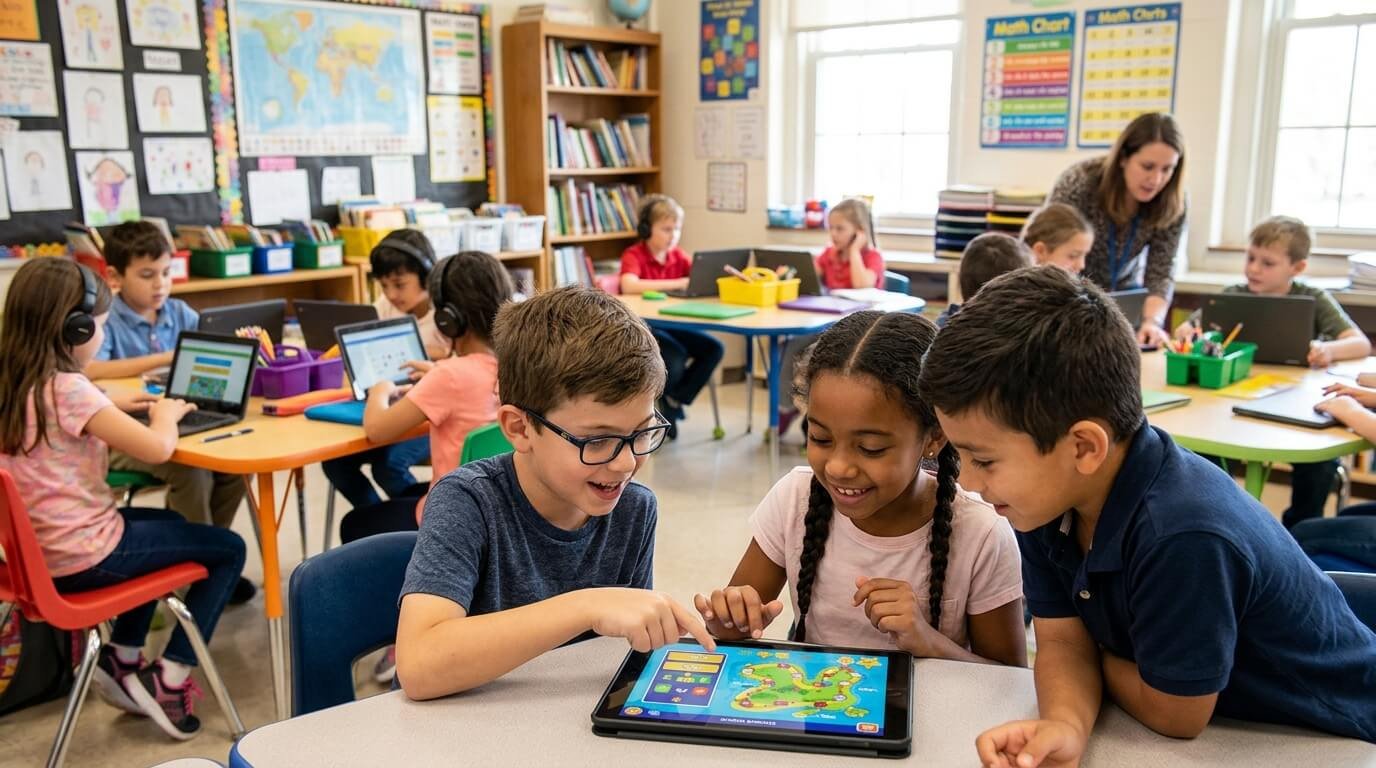
Learning does not always have to involve textbooks, written assignments, and traditional classroom lectures. Educational games offer another way for students to explore ideas, practice skills, and understand difficult topics. They combine learning activities with challenges, rewards, and interactive experiences that make lessons more enjoyable.
How educational games improve learning is an important topic for teachers, parents, and students. When games are designed around clear educational goals, they can help learners remember information, develop critical thinking skills, and participate more actively in lessons. Their value comes from combining enjoyment with meaningful practice.
How Educational Games Improve Learning
Educational games create opportunities for students to learn by doing instead of simply listening or reading. They may involve answering questions, solving puzzles, completing missions, or building virtual environments. These activities encourage learners to apply information rather than memorize it without understanding.
For example, a mathematics game might ask students to solve addition problems to unlock the next level. A language game could help them learn vocabulary by matching words with pictures. Through repeated practice, students become more familiar with important concepts while staying involved in the learning process.
| Aspect | Details |
|---|---|
| Main purpose | Make learning interactive and engaging |
| Common formats | Digital games, puzzles, quizzes, and classroom activities |
| Key benefits | Memory, motivation, problem-solving, and participation |
| Suitable learners | Children, teenagers, and adults |
| Learning environments | Schools, homes, training centers, and online classrooms |
| Best approach | Combine games with teaching and regular practice |
Educational Games Improve Memory and Retention
One major benefit of educational games is their ability to support memory. When students repeatedly use information to complete challenges, they have more opportunities to recall and strengthen what they have learned. This process can make important facts, formulas, and vocabulary easier to remember.
Games often include repetition without making every activity feel identical. Students might answer questions, earn points, and revisit earlier concepts in different situations. These experiences can reinforce learning, especially when the game provides enough time to think and encourages learners to understand why an answer is correct.
Games Increase Student Motivation
Some students lose interest when lessons rely entirely on lectures or repetitive worksheets. Educational games introduce goals, progress indicators, and achievable challenges that can encourage them to keep trying. Completing a level or solving a difficult question can also give learners a sense of accomplishment.
Motivation matters because students who are interested in an activity may be more willing to participate and practice. However, rewards should not become the only reason to learn. Well-designed games connect progress with actual understanding, helping students focus on mastering skills instead of collecting points.
Educational Games Develop Problem-Solving Skills
Many learning games require students to analyze situations, recognize patterns, and choose between different solutions. Instead of following instructions without thinking, players must decide what to do next and consider the possible results. These experiences can strengthen logical reasoning and independent thinking.
Strategy games, science simulations, and mathematical puzzles are useful examples. Students may need to manage limited resources, test an idea, or solve a problem using several steps. Such activities allow them to practice decision-making in a controlled environment where mistakes can become opportunities to learn.
More Benefits of Educational Games in the Classroom
They Provide Immediate Feedback
Feedback helps students understand whether they have learned something correctly. Many educational games respond immediately to an answer, showing whether it is right or wrong. Some also provide explanations or hints that help learners identify mistakes and try again.
This quick response can prevent confusion from continuing for too long. Teachers can also use game results to identify topics that need further explanation. Instead of waiting for a test, they can observe student performance during activities and adjust their teaching when necessary.
They Encourage Active Classroom Participation
Traditional classroom activities sometimes allow only a few students to answer questions while others remain quiet. Educational games can give more learners an opportunity to participate at the same time. Team quizzes, word challenges, and interactive exercises can make lessons more inclusive and energetic.
Students who feel uncomfortable speaking in front of the whole class may find smaller game-based activities less intimidating. Working with classmates can also encourage discussion and the exchange of ideas. Teachers should still ensure that everyone participates rather than allowing confident students to control every activity.
Games Make Difficult Subjects Easier to Understand
Some subjects become challenging when students cannot connect abstract ideas with practical examples. Educational games can turn these concepts into interactive experiences. For instance, a science simulation might demonstrate how forces affect moving objects, while a geography game can help students explore countries and physical features.
These activities give learners a way to experiment with ideas that may be difficult to demonstrate in an ordinary classroom. Visual examples and hands-on challenges can support understanding, particularly when teachers explain the concepts before or after the activity.
They Support Different Learning Needs
Students do not all learn at the same speed or respond to the same teaching methods. Some need extra practice, while others benefit from visual explanations or activities that gradually increase in difficulty. Educational games can offer different levels and repeated attempts to accommodate these needs.
Teachers can select games that match students’ ages, abilities, and lesson objectives. Some learners may work independently, while others benefit from group activities. Games should remain accessible and flexible, however, because a single format will not meet every student’s needs.
Examples of Educational Games That Support Learning
Different types of educational games can support different academic goals. Choosing the right activity depends on what students need to understand and practice.
- Mathematics games: Number puzzles, arithmetic challenges, and geometry activities help students practice calculations and recognize patterns.
- Language games: Word matching, spelling challenges, and vocabulary quizzes support reading, writing, and communication skills.
- Science games: Experiments and simulations help learners explore scientific principles and understand cause-and-effect relationships.
- History games: Timelines, historical role-playing, and interactive scenarios can help students understand events and historical decisions.
- Geography games: Map quizzes and location challenges help students learn about countries, cities, landforms, and world regions.
- Team-based quizzes: Classroom competitions encourage recall, discussion, and collaboration when questions are connected to lesson objectives.
Teachers should choose activities that match the subject and the students’ current knowledge. A simple word puzzle may be more effective for beginners than a complicated game with too many instructions.
How Teachers Can Use Educational Games Effectively
Educational games work best when they support a clear learning objective. Before introducing a game, teachers should decide what students should know or be able to do by the end of the activity. This makes it easier to select an appropriate game and evaluate whether it has helped students learn.
It is also useful to explain the rules before starting and give students enough time to understand the task. After the game, teachers can review important answers, discuss common mistakes, and ask students to explain their decisions. This discussion connects the enjoyable activity with the knowledge students are expected to develop.
Another important step is balancing games with other teaching methods. Reading, writing, classroom discussion, demonstrations, and individual practice remain valuable parts of education. Games should strengthen these activities rather than replace them completely.
Parents can use a similar approach at home by selecting age-appropriate learning games and discussing what children discover. Setting reasonable time limits and checking the educational content can help ensure that screen-based activities remain useful and balanced.
Potential Challenges of Using Educational Games
Although games offer several benefits, they do not automatically improve every learning outcome. Some activities focus heavily on entertainment, leaving students with little opportunity to practice meaningful skills. Others may be too difficult, too easy, or confusing for the intended age group.
Technology can create additional challenges. Digital games may require reliable internet access, suitable devices, or paid subscriptions. In classrooms with limited resources, printed puzzles, board games, and teacher-created quizzes can provide useful alternatives.
Competition also needs careful management. Students who repeatedly lose may become discouraged, while others may focus on winning instead of understanding the lesson. Teachers can address this by rewarding improvement, encouraging cooperation, and giving students opportunities to learn from mistakes.
Final Thoughts
Educational games can make learning more interactive by helping students practice skills, solve problems, and receive feedback as they progress. They can also encourage participation, support memory, and make complex topics easier to explore.
The best results come when games have a clear purpose and are combined with effective teaching. By selecting appropriate activities and reviewing what students learn, teachers and parents can turn educational games into a valuable part of everyday learning.
Frequently Asked Questions (FAQs)
How do educational games improve learning?
Educational games support learning through active participation, repeated practice, immediate feedback, and problem-solving activities. They can make lessons more engaging while helping students develop knowledge and useful academic skills.
Are educational games effective for children?
Yes, age-appropriate educational games can help children practice mathematics, reading, vocabulary, and reasoning. Their effectiveness depends on the quality of the activity, the child’s needs, and how well the game supports specific learning goals.
Can educational games improve memory?
Educational games can support memory by encouraging students to recall information and use it repeatedly. Activities that combine practice with explanations and meaningful challenges may help learners retain concepts more effectively.
Do educational games help students who struggle with schoolwork?
They can provide additional practice in a more interactive format. Games with adjustable difficulty, helpful feedback, and repeated attempts may help struggling students build confidence and understand challenging topics.
Are digital educational games better than traditional games?
Not necessarily. Digital games can offer interactive visuals and immediate feedback, while traditional games can encourage face-to-face communication and teamwork. The better option depends on the learning objective and the students involved.
Can educational games replace classroom teaching?
No. Educational games are best used alongside instruction, reading, discussion, and other learning activities. Teachers provide explanations, guidance, and assessment that games alone may not offer.
How can parents choose good educational games?
Parents should look for games that match a child’s age, ability, and educational needs. Clear instructions, appropriate difficulty, useful feedback, and meaningful learning activities are more important than colorful graphics or frequent rewards.

1 Comment
Pingback: Why Practical Learning Matters Benefits and Examples - Paperomagazine